Maine Is 'Meeting' Its Housing Goals While Prices Hit a Record. The Goals Are Wrong.
Maine says it's hitting its housing targets. Record prices, a bankrupt diner and stalled ADUs say the targets are wrong.

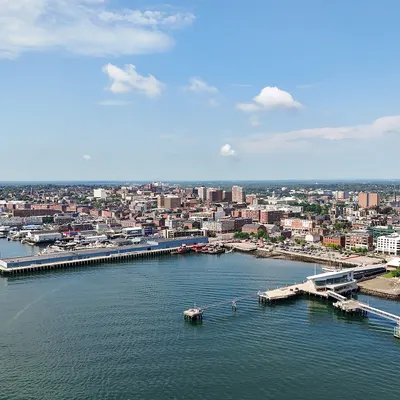
File photo: Portland, Maine, seen from the water. Photo: Seasider53 / CC BY 4.0 via Wikimedia Commons
Maine is, on paper, meeting its own housing targets. New permit data showed the state meeting its annual housing production goals, Maine Morning Star reported. We think that scorecard is measuring the wrong thing, and the rest of the record explains why.
Start with price. Maine's median home price hit an all-time high in June 2026, Mainebiz reported. That record arrived even as buyers pulled back: Maine home sales fell by nearly 3% in May 2026, Mainebiz reported. Fewer people were buying, and the ones who did were paying more than ever. A permit count that treats that combination as a win is grading itself on effort, not outcome. If the goal is affordability, and it should be, a record price posted alongside that same permit data is itself the evidence that the goal is measuring the wrong thing.
The human cost of that gap is not abstract. Employee housing costs pushed a Wells diner into Chapter 11 bankruptcy, Mainebiz reported. A restaurant did not fail because it stopped selling breakfast. It failed, in part, because the workers who make breakfast could not afford to live near the diner that employs them. That is what a housing shortage does to a local economy — it shows up in payrolls and bankruptcy filings, not in a permit spreadsheet.
Maine does know how to build when it decides to. Housing for Bath Iron Works shipbuilders and Navy workers is slated for completion in 2027, Mainebiz reported. That project exists because a large, identifiable employer needed workforce housing near a specific site, and the state and its partners built to that need. We think that's the model Maine should be scaling statewide, not treating as a one-off tied to a single shipyard.
Instead, the tools that would let Maine build faster and cheaper everywhere else are stuck. The state's modular housing industry was left in limbo after the Legislature failed to support a regulatory fix, Mainebiz reported — a fix for an industry that can add units faster than stick-built construction, stalled by inaction. Accessory dwelling units tell a similar story: ADU construction in Maine has not matched interest despite best efforts, The Portland Press Herald reported. Lawmakers did advance a bill to encourage more ADUs and greater housing density, the Portland Press Herald reported, and that's real progress. But interest without units built is exactly the gap between a permit goal and a lived outcome.
Bangor offers the clearest counterexample to business as usual. The city aims to speed up home building with free, pre-approved housing plans, Mainebiz reported — designs a homeowner or small builder can pull off the shelf instead of paying an architect and waiting out a permitting review from scratch. We think that idea should not stay a Bangor pilot. Every Maine city and town facing a housing shortage should be able to offer the same shelf of pre-approved plans, designed once and reused statewide.
The fairest case against all of this is that the Legislature's session did not fail outright: housing advocates said it brought both wins and losses on the state's home shortage, Mainebiz reported. That's true, and the ADU density bill is a genuine win lawmakers deserve credit for. But "wins and losses" describes a legislative process, not a housing outcome, and the outcome so far is a record home price. Progress on bill language should not be confused with progress on what a Maine family actually pays to live here.
None of this means Maine has done nothing. It means Maine has been measuring the wrong thing and calling it success. A permit target met while prices set a record is not a goal achieved — it's a goal that never measured affordability to begin with. The state should retire the annual production-goal framework and replace it with a target tied to price and availability, then fund the three things its own record already shows work: Bangor's pre-approved plans in every town that wants them, a modular-housing regulatory fix the Legislature actually passes, and ADU rules that convert interest into units, not just bill language.
Tell us where we're wrong — email the newsroom.