Maine Has the Fifth-Highest Home Power Prices. Stop Sending Households the Bill.
Maine ranks fifth in the nation for power prices; we think regulators should stop billing households for costs others created.
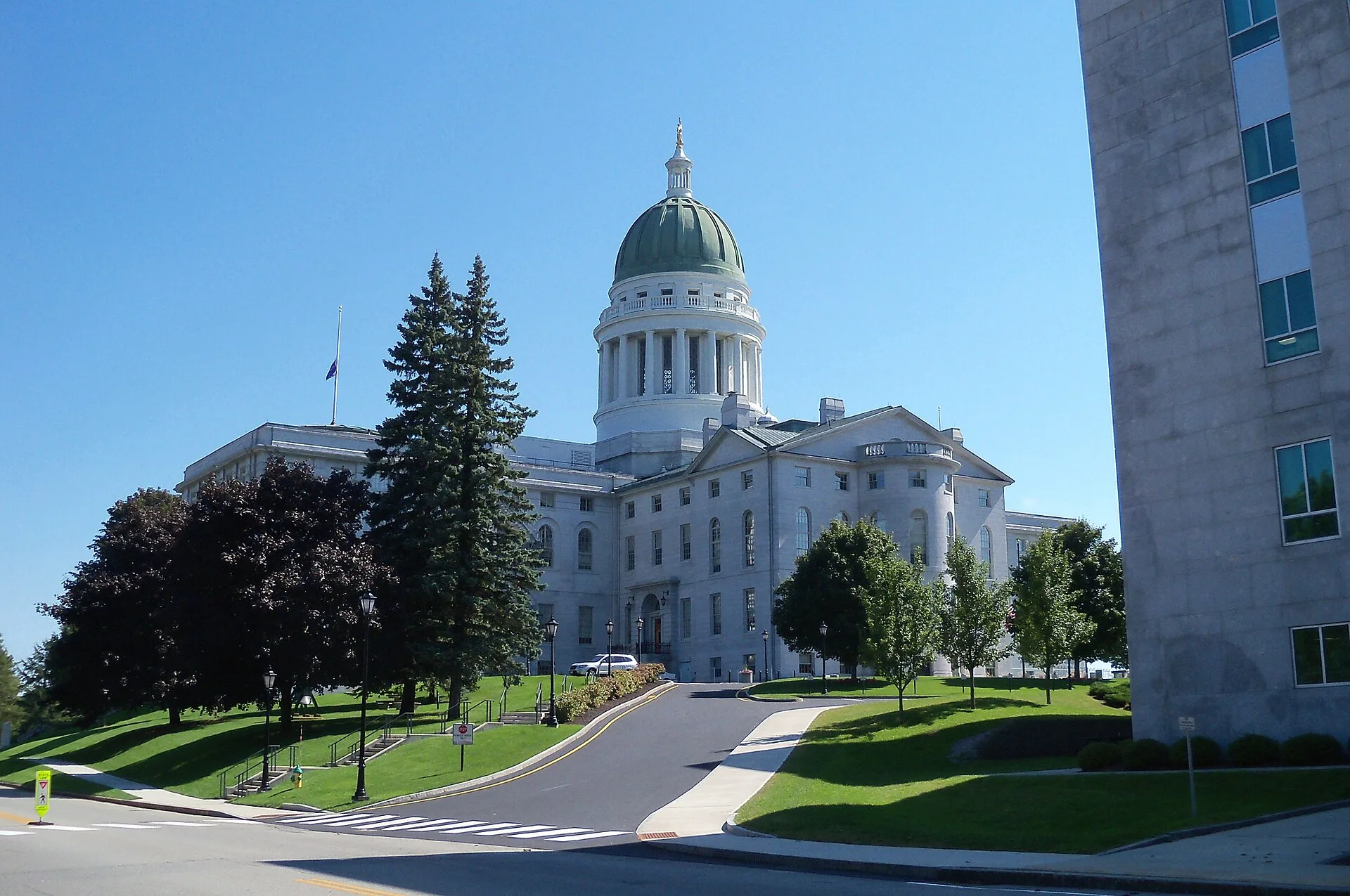
File photo: The Maine State House in Augusta. Photo: AlexiusHoratius / CC BY-SA 3.0 via Wikimedia Commons
Maine ranked fifth among the 50 states for residential electric prices between January and May 2026, Central Maine reported. The price of heating oil has broken the record set in 2022, The Portland Press Herald reported, after Maine heating oil prices rose 30% since the Iran conflict began, Mainebiz reported. We think Maine's energy regulators have a straightforward job in front of them and have not been doing it: stop approving increases that land on households by default, and start making the utilities, suppliers and project developers who missed their own obligations absorb more of the cost themselves.
Start with who is already telling regulators this is too much. In June 2026, Central Maine Power customers said energy prices were already too high and urged the Public Utilities Commission to reject a proposed rate hike, Maine Morning Star reported. That is not a fringe complaint — it is the position of the people whose bills the commission was deciding. CMP is not the only utility asking for more: Maine's utilities regulator is set to hold hearings on a proposed rate increase from Unitil, Mainebiz reported. We think the commission should treat every request like that one: not as an automatic pass-through to customers, but as a case the utility has to actually win, with the increase approved only where a company can show the cost genuinely cannot be avoided any other way.
The households paying these bills are frequently not the ones who created the shortfall in the first place. A report found that low-income Mainers were largely overcharged for their electricity supply, WMTW reported. And Maine solar customers lost their electric bill credits after project developers missed state payments, pv magazine USA reported in July 2026. In our view, that is backwards. When a developer misses a payment it owed the state, the fix should not be to claw the difference out of the customers who signed up for solar credits in good faith. A company that took on an obligation and did not meet it should carry that shortfall itself, not the household on the other end of the meter.
Ratepayers do not appear to be waiting around for that fix to come from Augusta. Three Aroostook County towns banded together in July 2026 to fight rising energy costs, Bangor Daily News reported. And in May 2026, Maine became the 11th state to allow community choice aggregation, Maine.gov reported, a law that lets towns pool their residents to negotiate their own power supply instead of taking what a utility offers. We think both stories are the same signal sent two different ways: towns and the ratepayers behind them are done waiting for a top-down fix, and they are starting to build their own leverage instead.
The strongest case against clamping down on rate increases is the one utilities and suppliers themselves would make, and it deserves a fair hearing: some of these costs are real and unavoidable, from fuel bought months ago at a higher price to storm damage and grid upgrades, and if regulators simply refuse to let a utility recover them, the company's finances suffer in ways that can eventually cost customers more, not less, through reduced reliability or a larger increase later. We are not arguing every rate case should be denied outright, and we think that would be as much of a mistake as rubber-stamping every one. But there is a real difference between recovering an unavoidable cost and deciding who eats a cost a company was responsible for avoiding in the first place, like a supplier that overcharged low-income customers or a developer that simply did not make a payment it owed. Regulators can hold both lines at once: let the honest, unavoidable costs through, and put the costs created by someone else's failure on that someone else first.
None of this is erased by one good month. Central Maine Power bills were set to go down in July 2026, WGME reported. We are glad for anyone whose bill dropped that month. But a single dip from one utility does not undo a year in which Maine ranked fifth in the nation for residential electric prices and heating oil broke a record set in 2022. It is not an answer to the question towns and ratepayers are already answering for themselves: when the numbers do not work, who should carry the difference. We do not think the answer should default, case after case, to the household.
Maine's regulators have real decisions ahead, including whatever comes out of the Unitil hearings and the next request that lands after the 2026 CMP fight. Each one is a chance to put a missed payment or an overcharge on the party that caused it, rather than treating a household's bill as the fallback plan whenever something else in the system does not add up. We think that is the standard regulators should be holding to by default, not the exception they reach for only when ratepayers organize loudly enough to force it.
Tell us where we're wrong — email the newsroom.