Maine Mailed $300 Checks While MaineDOT Stares at a $130 Million Hole
Maine mailed $300 checks in an election year while MaineDOT, SNAP, county jails and a safety-net clinic face recurring, multimillion-dollar shortfalls.
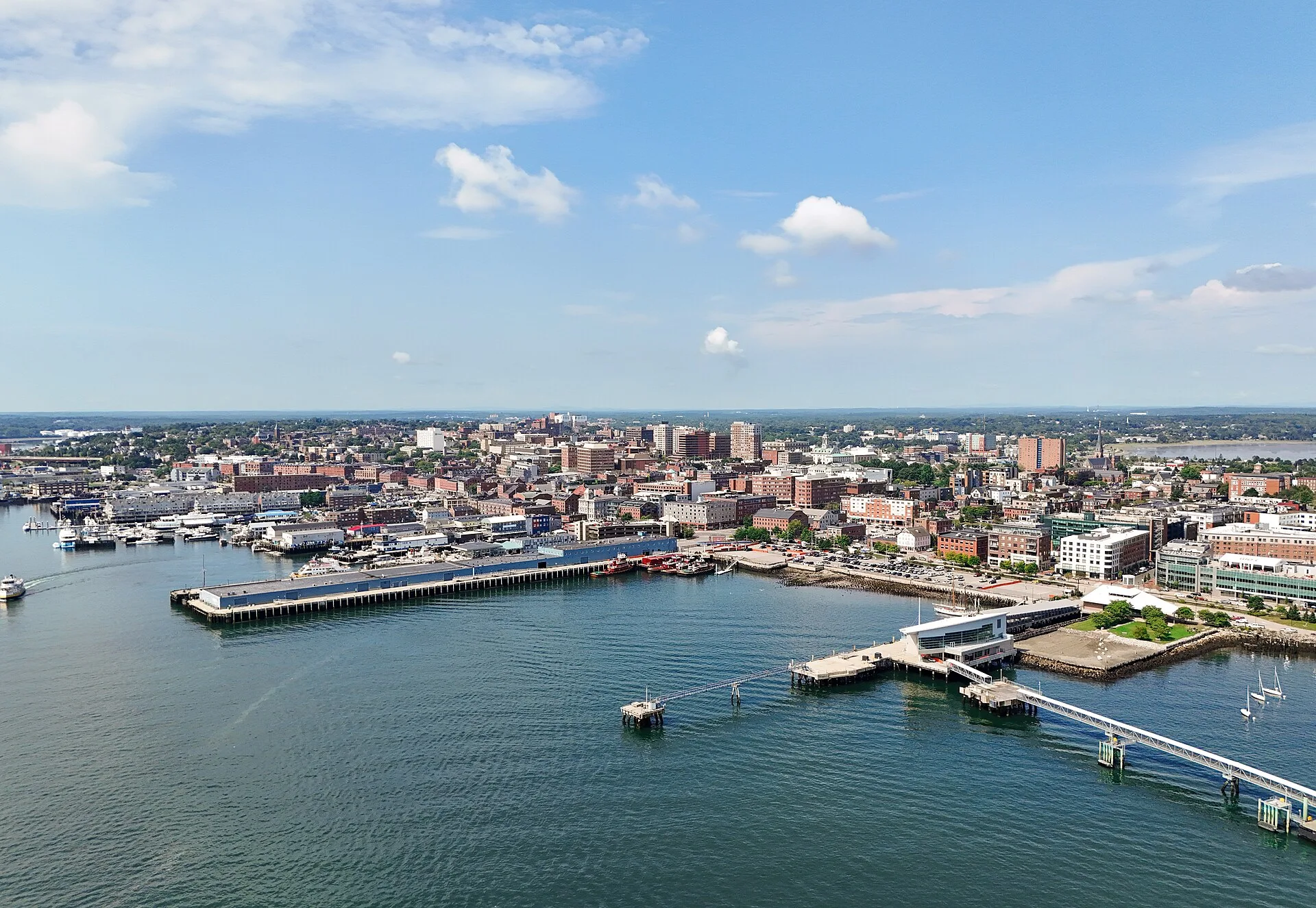
File photo: Portland, Maine skyline. Photo: Quintin Soloviev / CC BY 4.0 via Wikimedia Commons
Maine mailed $300 checks to households in 2026, and the debate over the payments started almost immediately. Questions about who actually qualified for the money followed lawmakers' approval of the program, the Portland Press Herald reported, and critics went further, asking whether Gov. Janet Mills' proposed relief checks were even legal, WGME reported. By August 2026, the checks were arriving in mailboxes anyway, The Maine Wire reported, the same month Maine's $500 million supplemental budget took effect, The Maine Wire also reported.
We think that was the wrong call, and the state's own numbers explain why. On April 9, 2026, a millionaire tax cleared the Maine Legislature, Bloomberg Tax reported, adding new, ongoing revenue to a budget that the Mills administration says closed the 2026 fiscal year with a $148 million surplus, WMTW reported. That is real money, and a slice of it went out the door as a single mailbox payment. Meanwhile, the list of the state's genuinely recurring obligations kept getting longer.
Start with roads and bridges. The Maine Department of Transportation faces cutting projects to make up for a $130 million funding shortfall, WGME reported. That is not a one-year problem; it is a hole that reopens every budget cycle unless the state finds a durable funding source, and no supplemental check repaves a road.
Then there is food assistance. Maine could owe $50 million a year to maintain SNAP benefits under a new federal mandate, Maine Morning Star reported. That is not a figure that shrinks after one good budget year — it is an annual bill, and it lands on many of the same households the $300 checks were meant to help.
County jails are stretched too. Municipalities said the $4 million the state allocated for county jails is not enough to cover rising costs, Maine Public reported. And Penobscot Community Health Care, a safety-net provider, said it needs $3 million within weeks to avoid a crisis, WABI reported — a warning serious enough that a bipartisan group of lawmakers later sent a letter urging the state to fund it, WABI also reported.
Put those numbers side by side — a $130 million transportation hole, a $50 million-a-year SNAP mandate, a $4 million jail allocation that towns already say is short, and a clinic pleading for $3 million within weeks — and the contrast with a one-time $300 mailing is hard to miss. We think the surplus and the new millionaire-tax revenue should have gone first to the costs that come back every single year: transportation funding, the SNAP mandate, jail budgets and safety-net health care. A check that clears once does not repair a highway fund, and it does not keep a clinic solvent in year two.
The strongest case for the checks deserves a fair hearing. The cost of living has squeezed Maine households, and $300 in hand helps a family cover a heating bill or a car repair in a way a repaving contract never will; visible, direct relief also builds the public support that revenue changes like the millionaire tax need to survive politically. We don't dismiss that. But many of the same households the checks were meant to help also depend on SNAP, on roads that get them to work, and on clinics like Penobscot Community Health Care staying open. A single check does not offset a program that is set to cost the state $50 million a year, or make up for a health system that closes its doors. Immediate relief and durable funding aren't actually competing for the same dollar if lawmakers plan for both — the mistake was treating a one-time payment as if it discharged the state's obligation to the harder, recurring bills.
None of this required inventing a crisis. Every figure above came from the state's own agencies or the reporters who covered them in 2026. What it required was priority-setting, and in an election year, Augusta chose the one-time, mailbox-visible option over the recurring, harder-to-explain one. We think that was backwards. A year from now, the $130 million road hole, the $50 million SNAP bill and the clinic's cash crunch will all still be due — and the $300 checks will be long spent.
Tell us where we're wrong — email the newsroom.